Best Screwdriver Set UK: Pozi vs Phillips vs Torx
TL;DR: The best screwdriver set for UK homes must include high-quality Pozidriv (PZ) bits, as most UK wood screws are Pozi. Consequently, using a standard Phillips screwdriver on a Pozi screw will cause slipping (cam-out) and damage. Based on our testing at InfuriPaint, an ideal kit should feature PZ1–PZ3, PH1–PH2, and Torx T10–T30 with hardened steel tips. Furthermore, for any electrical tasks, always choose a VDE-certified insulated 1000V set.
Key Takeaways
- Most UK screws in homes are Pozi (Pozidriv)—using Phillips on Pozi commonly causes cam-out, chewed heads, and snapped bits.
- The best screwdriver set UK for everyday DIY should cover: Pozi (PZ1–PZ3), Phillips (PH1–PH2), Torx (T10–T30), plus a couple of flat blades.
- Look for hardened tips, comfortable handles, and practical features (magnetised tips or a magnetic bit holder). For electrical work, use an insulated screwdriver set 1000V UK with proper certification.
- Under £30 can be excellent for homeowners if you prioritise tip quality and the right Pozi sizes—pay more for VDE insulation, premium ergonomics, or pro-grade steel.
What is the best screwdriver set for UK homes? (Pozi vs Phillips vs Torx)
To find the best screwdriver set in the UK, you must first ensure it explicitly caters to Pozidriv, Phillips, and Torx heads. Ever tried hanging a curtain rail, tightening a kitchen cabinet hinge, or swapping a plug faceplate—only to watch the screwdriver bit spin, slip, and chew the screw head into a shiny crater? In UK homes, that frustrating moment is very often down to one thing: using a Phillips screwdriver on a Pozi screw.
Therefore, this guide breaks down the practical differences between Pozi vs Phillips vs Torx, what a good set actually needs (beyond a dozen near-identical bits), and which type of set makes sense for your work—whether that is DIY, furniture assembly, automotive repair, or electrical maintenance.
Why do UK homes use Pozi screws? (And can you use a Phillips on a Pozi?)
Pozi (Pozidriv): the UK staple for wood screws and general fixings
If you’ve done any DIY in the UK, you’ve undoubtedly met Pozi. Many common UK wood screws, chipboard screws, and general-purpose fixings are Pozidriv (usually PZ2). You can often spot Pozi by the extra faint cross marks between the main slots—effectively “little ribs” that indicate it’s not a standard Phillips.
Why it’s common: Pozi offers significantly better torque transfer than Phillips and is specifically designed to reduce slip when driving screws. As a result, this is incredibly useful for fast assembly lines and for trades putting in hundreds of fixings per day.
Phillips: common in products, appliances, and older fixings
Phillips (PH) is still everywhere—particularly in imported flat-pack hardware, appliances, electronics housings, and older fittings. However, Phillips was originally designed with intentional cam-out (slipping) to prevent overtightening in manufacturing. Consequently, that’s the exact opposite of what you want when you’re trying to seat a wood screw firmly in a door hinge.
Torx: increasingly popular for high-torque, low-slip work
Torx (T) is common in automotive trim, bike components, security fixings, and more premium wood screws or decking screws. A good Torx fit tends to feel “locked in”, allowing high torque with less damage to the head. For many DIYers, Torx quickly becomes the favourite once they’ve used it properly.
What happens if you use a Phillips screwdriver on a Pozi screw?
Based on our testing at InfuriPaint, mismatching these drives leads to immediate, frustrating problems:
- Cam-out and slippage: The bit rides up and out under load, gouging the screw head and inevitably scratching paintwork or timber.
- Rounded heads: Once chewed, removal becomes much harder (often requiring extractor bits or locking pliers).
- Broken bits: This is especially common with cheap steel and powerful impact drivers.
- Wasted time: Ultimately, this is the hidden cost in “budget” tools.
As a golden rule of thumb for UK jobs: if it’s a typical UK wood screw, start by testing PZ2. If it feels loose or rocks, try PH2, or Torx if the head shape matches.
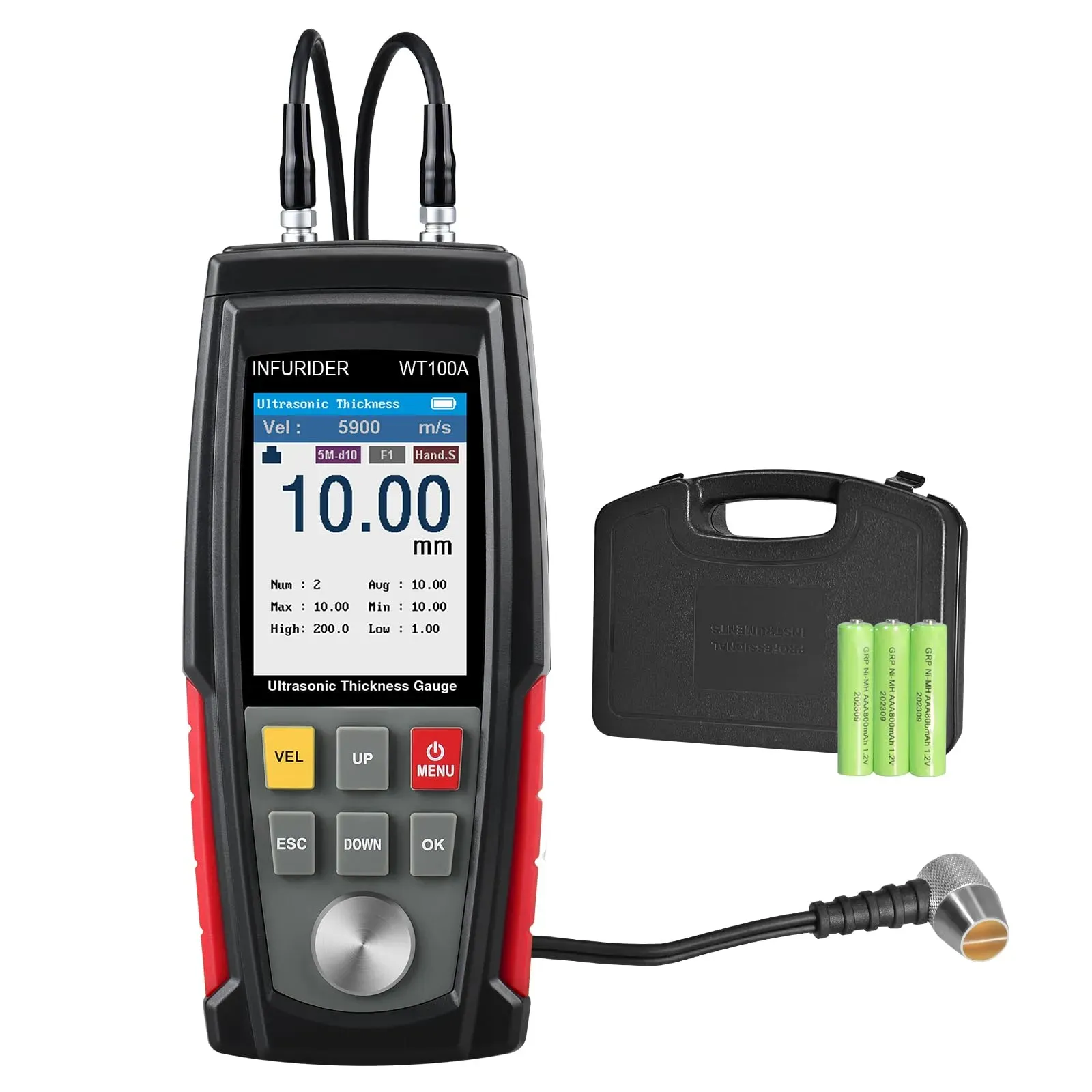
Renovating a car or checking for hidden filler before you buy? See our Ultrasonic Paint & Metal Thickness Gauge — dual-mode readings from £104.87 with free UK delivery.
How do I choose the right screwdriver set?
1) Tip fit and steel quality matter more than the number of pieces
The “best” set is ultimately the one that fits your screws precisely. A 60-piece set is pointless if the tips are soft and poorly machined. Therefore, look for hardened, corrosion-resistant steel, crisp tip geometry, and a brand with consistent quality control.
Based on our testing (UK DIY reality): In most households, PZ2 and PH2 do the bulk of the work. If those two tips are poor, the entire set feels poor.
2) Shank design: round, hex, and through-shank
- Round shank: Fine for general tasks; they are lighter and comfortable to hold.
- Hex bolster: Lets you apply a spanner for extra torque—highly useful on stuck screws.
- Through-shank (strike cap): Built for being struck with a hammer (e.g., stubborn screws, light chiselling). Great in a pro set, but optional for most homeowners.
3) Handle ergonomics: torque without blisters
Good handles reduce hand fatigue and improve control. If you do lots of flat-pack assembly or repeated driving, a slightly larger, grippy handle can be the difference between steady progress and sore hands. Conversely, for precision tasks (like electronics), smaller handles help improve control.
4) Magnetism: when a magnetic screwdriver set makes sense
A magnetic screwdriver set UK is exceptionally useful when you’re working one-handed (e.g., holding a fitting with the other hand) or driving screws overhead. There are two common approaches:
- Magnetised tips: Convenient, but magnetism can fade over time, and not every screw/bit combination holds equally well.
- Magnetic bit holder: Often stronger and more versatile—particularly with interchangeable bits.
If you work around sensitive electronics or certain medical devices, keep magnetism in mind. However, for most home DIY, it’s a massive net positive.
5) Safety for electrics: insulated screwdriver sets and UK regs
If you’re doing any work near live conductors, don’t guess—use the right tools. A proper insulated screwdriver set 1000V UK should be VDE tested and marked for 1000V AC use (and used alongside safe isolation and a proving unit where appropriate). According to UK guidelines, specifically the IET Wiring Regulations (BS 7671), safe isolation practices aren’t optional.
UK context: Many people do minor tasks like changing faceplates or replacing a light switch, but even then you need correct isolation and tools. If you’re ever unsure, hire a qualified electrician—your time (and safety) is worth far more.
One useful data point (hand injuries are common)
Hand tool slips are a classic cause of minor injuries. According to the NHS, over 4 million people attend A&E in England each year due to accidents (latest annual figures vary by year). While that includes all accident types, it serves as a stark reminder that tool control and correct fit matter. Source: NHS guidance on A&E and emergencies.
Which type of screwdriver set should I buy?
For general UK DIY (the “household hero” set)
Choose a set focused on the sizes you’ll actually use, with excellent Pozi tips. We recommend you prioritise: PZ1, PZ2, PZ3, plus PH1 and PH2, a couple of slotted (flat) drivers, and a small Torx selection (T15–T25 is a solid starting point).
Related reads: Best Hand Tools for DIY in the UK: Buyer’s Guide ( · Best Hammer in the UK: Claw vs Framing vs Rubber M
Refinishing after assembly? Verify paint depth before polishing.
Free UK delivery · 30-day returns · USB-C rechargeable · Dual paint & metal modes
View the Pro-T1 Gauge — £104.87